
When Your Platform Won't Bend: Taking Back the Customer Experience
Your platform runs the business, but won't let you change what customers see or how checkout works. There's an option between living with it and replatforming.

Many growing businesses eventually hit the same wall with their software. The platform runs the operation well, but the part customers see isn't really yours. You can change the logo and a few colors. You can't change what shows up on the page, where the buttons lead, or how checkout works.
For a lot of owners the only options seem to be living with it or starting over on a new platform. There's a third option, and we used it on a recent project.
The situation
The business ran on more than one platform behind the scenes, and each one was doing its job. The trouble was all on the customer side:
- Elements appeared on screen that the business didn't want customers to see.
- Buttons and links sent customers where the platform wanted, not where the business wanted.
- Each platform had its own cart and its own checkout, so buying felt like jumping between different companies.
- None of it was configurable. No access to the page code and no control over where links pointed.
What we did
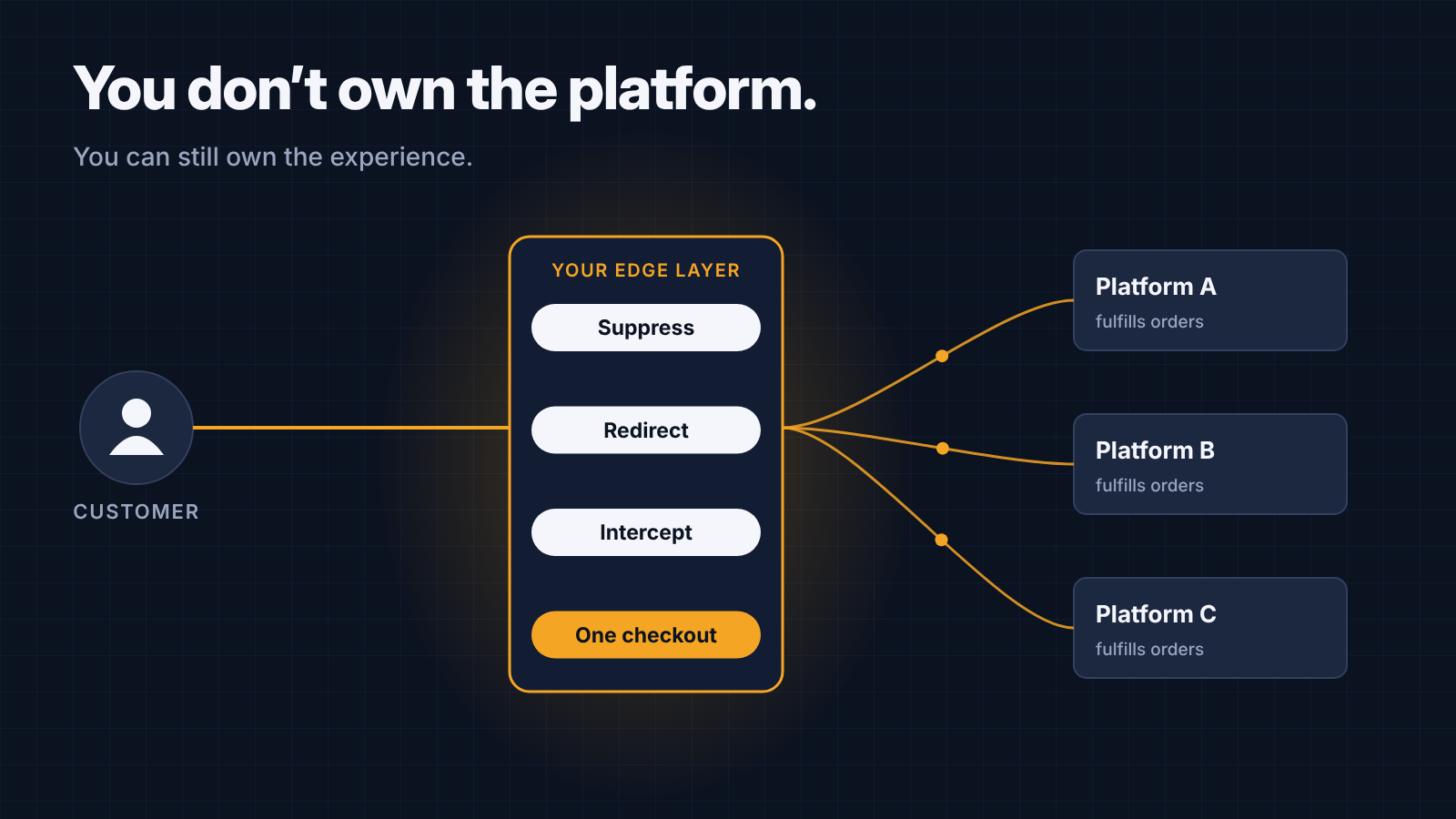
We placed a Cloudflare Worker in front of the platforms, on the business's own domain. Every customer request now passes through that layer before it reaches any vendor. From there we could:
- Hide what shouldn't be seen. Unwanted elements are removed before the page reaches the customer's browser, so nothing flickers in and out.
- Send clicks where they belong. Existing buttons stay where they are, but now lead where the business wants them to.
- Decide what reaches each platform. Requests can be passed through, handled directly, or routed somewhere else.
- Bring checkout under one roof. We took the cart and checkout out of the individual platforms and built a single checkout the business owns. Customers see one consistent experience, and each order goes to whichever platform fulfills it.
Owning the cart also opened up options the platforms didn't allow, so the business can now offer configurations and add-ons its customers couldn't choose before.
What to think through first
This approach works well in the right situation, but it isn't a shortcut. These are the parts we plan for before any work starts:
- Checkout responsibilities. When you own checkout, you own payments, order records and customer accounts. We build those on reputable payment providers and plan them carefully.
- Order handoffs. Each platform has to receive orders the way it expects, and every handoff needs a plan for what happens if it fails.
- Vendor updates. The layer depends on pages you don't control, so it needs monitoring and a safe fallback when a vendor changes something.
- Vendor terms. We confirm your agreements allow this before any work begins.
Is this right for your business?
If your platform does the work but won't let you shape the experience, or you're running several systems that your customers can tell apart, a front-door layer may get you there without the cost and risk of a full replatform.
Talk to Safire Business Services about whether it fits your setup.